The following comes from Frank Weathers:Shouldn’t comes as a shock really, as Jesus Christ wants the same thing from us too.Here’s a little snippet of Andrea Tornielli’s report on Pope Francis’s message to the leadership in South America, and to the episcopate everywhere.Francis concluded his trip to Brazil with another wide-ranging speech to the coordinating committee of the Latin American Episcopal Council (CELAM). But Francis’ words will most certainly resonate beyond the Latin American continent.The Pope asked bishops to give a missionary slant to the daily activities of local Churches, explaining that the “change of structures” (from obsolete ones to new ones) will not be the result of reviewing an organizational flow chart” but will “result from the very dynamics of mission.” Francis recalled that the general assembly of Latin American bishops at Aparecida in 2007 had presented “pastoral conversion” as a “necessity”. The Pope then asked bishops to reflect on some questions with regard to the current state of the Church: “Do we see to it that our work, and that of our priests, is more pastoral than administrative? Who primarily benefits from our efforts, the Church as an organization or the People of God as a whole?”The questions then focused specifically on the laity and their role in the Church: “In practice, do we make the lay faithful sharers in the Mission?” As pastors, bishops and priests are we conscious and convinced of the mission of the lay faithful and do we give them the freedom to continue discerning, in a way befitting their growth as disciples, the mission which the Lord has entrusted to them? Do we support them and accompany them, overcoming the temptation to manipulate them or infantilize them?” His words portray the picture of the Church’s current situation in a number of countries, European ones too.Speaking of the importance of the Church engaging in dialogue with the world around it, Francis referred to what was said at the Second Vatican Council to explain the basis of dialogue with contemporary society: “The joys and hopes, the grief and anguish of the people of our time, especially of those who are poor or afflicted, are the joys and hopes, the grief and anguish of the followers of Christ as well.” The Church needs to be aware of the varied “scenarios and the areopagi involved.” “If we remain within the parameters of our “traditional culture” which was essentially rural, we will end up nullifying the power of the Holy Spirit. God is everywhere: we have to know how to find him in order to be able to proclaim him in the language of each and every culture; every reality, every language, has its own rhythm.”Read it all.Not sure what I mean by the term intentional disciple? Sherry Weddell can help you out there, as can the group of bloggers at Catholic Mom, with their series called theLawn Chair Catechism. Afterall,"The harvest is great but laborers are few!"
Source:http://salesianity.blogspot.com/2013/07/pope-francis-wants-you-to-be.html
Pope Francis Wants YOU To Be An Intentional Disciple Images
Da Mihi Animas: Pope Francis Wants YOU To Be An Intentional Disciple
(444 x 275 - 169.96 KB - jpeg)

pope-francis_2541160b
(620 x 387 - 44.70 KB - jpeg)
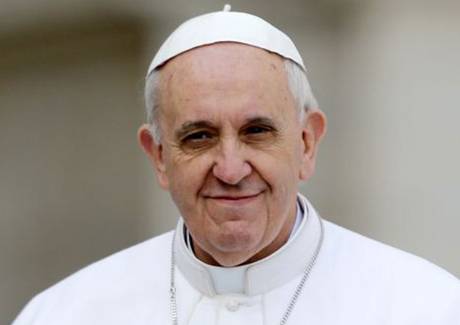
pope-francis1 eASTER BLESSING
(460 x 325 - 10.84 KB - jpeg)

Catholic Fire: Thomas Peters is in critical condition and needs our ...
(150 x 247 - 9.99 KB - jpeg)

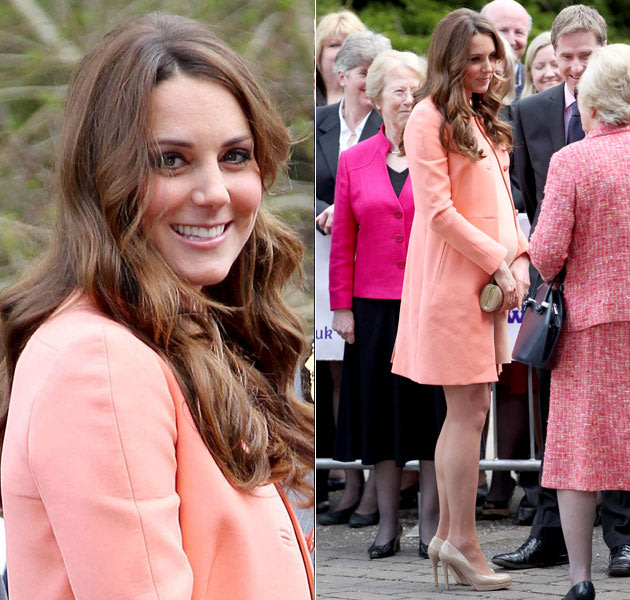
 Can an unborn royal baby inherit the throne? When I was asked this question today, I remembered that I had written about this subject several years ago. The scenario is one which we in this country shall hopefully never face; nevertheless, it raises some interesting issues and I therefore post the question and my response:Q: Can an unborn baby inherit the throne? e.g. the King dies while his wife is pregnant with their son. Will that unborn son inherit or eventually inherit the throne?A: As with all such questions, one must first look to the law of succession applicable to the state / house in question. Unfortunately, in the case of our own Monarchy, there is no clear answer.We must therefore turn to history for guidance. Whilst our Monarchy has never dealt with this scenario, there have been examples on the continent.Louis X's queen, Clemence d'Anjou, was pregnant at the time of his death in 1316. In what laid the foundation for Salic succesion, Louis' living daughter was passed over and Louis' brother was named regent. 5 months later Clemence gave birth to a boy, who immediately succeeded to the throne as King Jean I. He died a few days later and the regent succeeded as King. Had Clemence given birth to a daughter, the regent, as heir presumptive, would have been named Sovereign retroactively to the date of his brother's death. Something similar occurred a few years later, also in France, with Philip VI's succession to Charles IV in 1328, although Philip's relationship was more distant.A less ancient case occurred in Spain in 1885, where the law of succession was similar to our own. Upon the death of King Alfonso XII his pregnant queen was appointed regent. Her child was proclaimed King upon birth. We might expect a similar scenario in the case of our own monarchy, although this cannot be guaranteed as the Regency Act permits the establishment of a regency only where a sovereign exists.Unfortunately we cannot look to any UK legislation for advice as none deals with this specific event. Whilst any answer must therefore be speculative, our own history provides us with one possible solution. Queen Adelaide, William IV's widow, was still of child-bearing age upon his death in 1837. Consequently Victoria was proclaimed queen "saving the rights of any issue of his late Majesty's consort". This proclamation may provide some indication of the manner in which the matter might be handled -- although it is our law-makers who shall have final say.